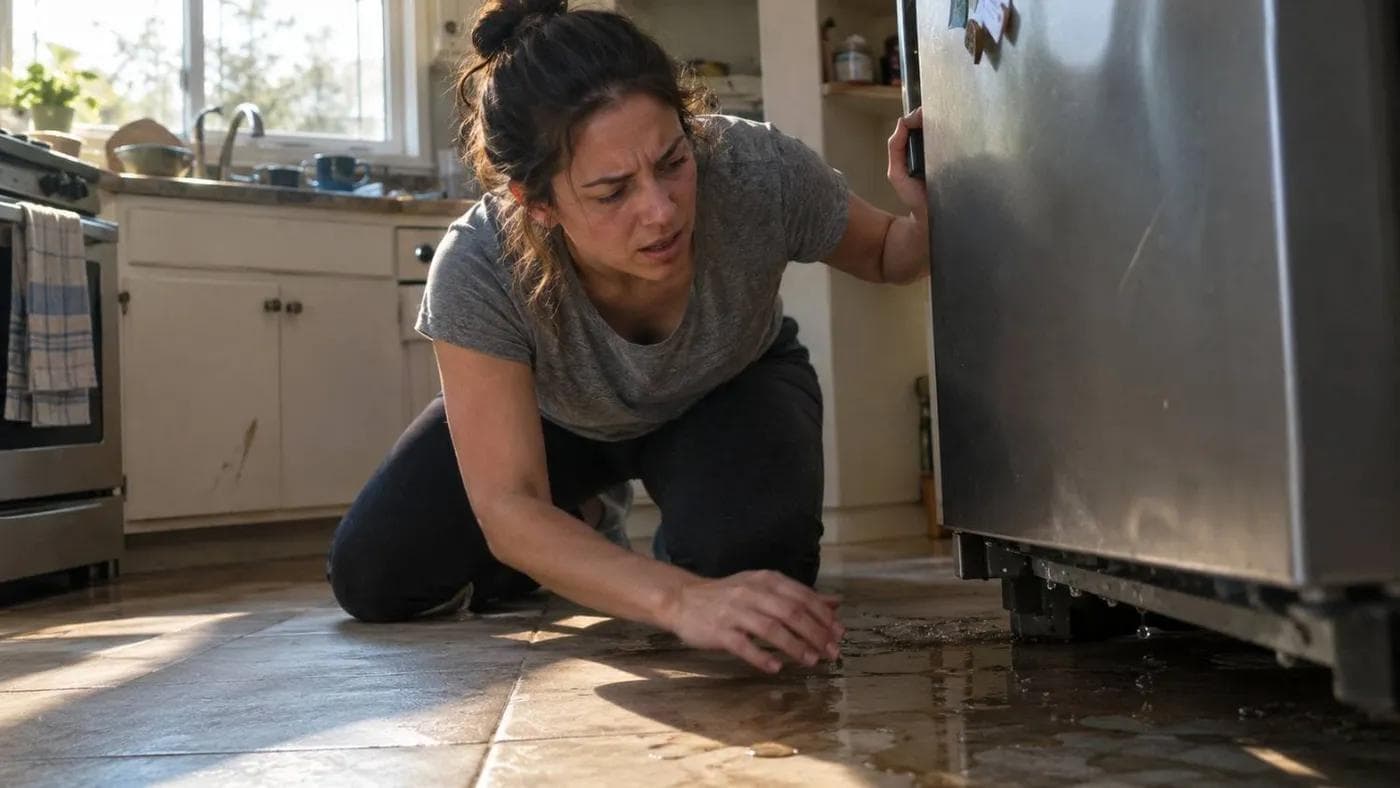
You walk into the kitchen and step into a puddle you didn’t expect. A leak from the bottom of your refrigerator is one of those problems that looks alarming but usually traces back to something simple and fixable.
This guide walks through the five most common causes, how to tell which one applies to you, and when it’s worth calling in a professional instead of guessing.
Quick Answer: It’s Almost Always the Defrost System or Drain Pan
Before getting into specifics, it helps to know where most bottom leaks actually come from.
Why Leaks From the Bottom Differ From Leaks Inside the Fridge
A leak pooling underneath or in front of your refrigerator points to a different set of causes than water collecting inside the compartments. Bottom leaks almost always trace back to the defrost drain, the drain pan, or a leveling issue rather than a cooling malfunction.
If your fridge is also struggling to stay cold, our guide on refrigerator not cooling covers that separate set of causes.
The Fastest Way to Narrow Down the Source
Note when the puddle appears, how often, and whether it happens at a regular time of day. A leak tied to the defrost cycle usually shows up on a predictable schedule, while a water line issue tends to appear whenever the dispenser or ice maker is used.
Before You Do Anything: Safety and Damage Control
A couple of quick steps protect both you and your flooring while you investigate.
Unplug the Fridge Before Investigating
Unplug the refrigerator before pulling it away from the wall or removing any panels, since water and electrical components near the compressor area don’t mix safely.
Protecting Your Flooring From Water Damage in the Meantime
Lay down towels around the base of the fridge to limit water spreading across your flooring while you work through the possible causes below.
Cause 1: A Clogged or Frozen Defrost Drain
This is the single most common reason refrigerators leak from the bottom, and it’s usually an easy fix once you know where to look.
How the Defrost System Is Supposed to Work
Modern refrigerators defrost automatically on a timer, melting frost from the evaporator coils. That water flows down through a drain tube into a pan at the bottom of the unit, where it normally evaporates on its own.
What Clogs the Drain Tube (Food Debris, Ice, and Buildup)
Food particles, ice fragments, and general debris commonly work their way into the drain tube and block it over time, preventing water from reaching the pan the way it’s supposed to.
Why This Is the Single Most Common Cause of Bottom Leaks
When the drain clogs, water backs up and overflows inside the freezer or fridge compartment instead, eventually leaking out through the bottom of the door seal and onto your floor.
How to Clear a Clogged Defrost Drain Yourself
Locate the drain opening, usually at the back of the freezer compartment, and flush it with warm water using a turkey baster or funnel. A flexible wire or pipe cleaner can help clear more stubborn blockages.
Cause 2: A Cracked or Overflowing Drain Pan
Even with a clear drain, the pan itself can become the source of the problem.
What the Drain Pan Does and Where to Find It
The drain pan collects water from the defrost cycle and lets it evaporate naturally. It’s usually located at the bottom of the refrigerator, behind a kick plate or access panel.
Signs the Pan Itself Is Cracked or Damaged
A visible crack or split in the pan will let water leak straight onto the floor instead of staying contained until it evaporates.
Why a Blocked Pan Overflows Even Without a Crack
If airflow around the pan is restricted, water can’t evaporate fast enough between defrost cycles, causing it to overflow even when the pan itself is perfectly intact.
Cause 3: A Refrigerator That Isn’t Level
An unlevel fridge is a surprisingly common cause, especially after a move or a flooring change.
How Being Off-Level Causes Water to Spill Past the Pan
If the refrigerator tilts forward even slightly, water can spill over the front lip of the drain pan before it has a chance to evaporate.
The Quick Level Check You Can Do With a Carpenter’s Level
Place a carpenter’s level on top of the fridge, checking both side to side and front to back, to confirm whether the unit is actually sitting level.
Adjusting the Front Leveling Legs Yourself
Most refrigerators have adjustable front legs you can turn with a wrench or by hand to raise or lower each side until the unit sits level.
Cause 4: Water Line and Dispenser Issues
If your fridge has a water or ice dispenser, the supply line itself can be the source of a leak.
A Damaged or Improperly Connected Water Supply Line
A cracked line or a loose connection at the back of the fridge can leak slowly, often pooling underneath before you notice it anywhere else.
Air Trapped in the Line After a Filter Change
Replacing a water filter can trap air in the line, which sometimes causes minor leaking or sputtering at the dispenser until the line purges itself.
A Loose or Faulty Water Filter Housing
A filter that isn’t seated correctly, or a housing with a worn seal, can leak at the connection point every time the dispenser or ice maker runs.
Cause 5: A Failing Door Seal Increasing Frost and Overflow
A worn door gasket doesn’t just waste energy, it can directly contribute to a leak.
How a Bad Gasket Leads to Excess Frost Buildup
A gap in the door seal lets warm, humid air into the freezer, which increases frost buildup on the evaporator coils faster than normal.
Why More Frost Means More Water at Defrost Time
More frost means more water produced during each defrost cycle, which increases the odds of overwhelming the drain system and causing an overflow.
The Dollar Bill Test to Check Your Seal
Close the door on a dollar bill so it’s half in and half out. If it slides out easily, the seal isn’t gripping tightly enough to keep humid air out.
Diagnostic Checklist: Match the Leak Pattern to the Cause
Use these quick observations to point yourself toward the right cause above.
Puddle Appears Once or Twice a Day at a Regular Time
This points toward a clogged defrost drain, since the leak lines up with the automatic defrost cycle running on schedule.
Leak Started Right After a Water Filter Change
This points toward trapped air or an improperly seated filter housing rather than the defrost system.
Ice Visible Under the Crisper Drawers or Freezer Basket
This points toward a defrost drain clog, since blocked water is backing up into the compartment instead of draining properly.
Leak Only Happens When the Fridge Runs on an Angle or Uneven Floor
This points toward a leveling issue, since gravity is pulling water past the drain pan before it can evaporate.
What These Leaks Can Damage If Left Alone
A small leak might not seem urgent, but ignoring it can lead to bigger problems.
Warped or Water-Damaged Flooring
Standing water left too long can warp wood flooring or damage the subfloor beneath tile and vinyl.
Mold Growth Under and Around the Refrigerator
Moisture sitting under an appliance for an extended period creates the kind of environment mold needs to grow, similar to the conditions covered in our guide on why washing machines develop a mildew smell.
Electrical Risk From Water Near the Compressor Area
Water pooling near the compressor or electrical components at the back of the fridge introduces a real safety risk that’s worth addressing quickly.
DIY vs. Calling a Professional
Some of these fixes are simple enough to handle yourself. Others are worth leaving to someone with the right tools.
Safe DIY Fixes: Draining, Leveling, and Basic Drain Clearing
Clearing a defrost drain, adjusting leveling legs, and wiping down a drain pan are all safe, straightforward tasks for most homeowners.
Repairs Better Left to a Professional (Sealed System, Internal Panels)
Replacing a cracked drain pan that requires disassembling internal panels, or diagnosing a water line issue inside the wall, is often better handled by a professional.
Why Some Models Route the Drain Somewhere You Can’t Easily Reach
Some refrigerator models route the defrost drain through internal panels that aren’t designed for easy homeowner access, which is worth knowing before you start disassembling anything.
What It Costs to Fix in 2026 (Repair Pricing Breakdown)
Here’s a general sense of what to expect depending on the cause.
Defrost Drain Clearing Cost (DIY vs. Professional)
Clearing a drain yourself costs nothing beyond a little time, while a professional visit for the same issue is one of the more affordable service calls available.
Drain Pan Replacement Cost
Drain pan replacement is generally an inexpensive repair, since the part itself is simple and low cost.
Water Line and Filter Housing Repair Cost
Water line and filter housing repairs vary depending on whether the issue is external or requires accessing internal connections, which affects the labor involved.
Door Seal Replacement Cost
Door seal replacement falls in a moderate cost range and often pays for itself through improved energy efficiency alone.
Repair vs. Replace: When a Leaking Fridge Isn’t Worth Fixing
If a leak points to a larger sealed system issue and the repair cost approaches half the price of a new refrigerator, replacement usually makes more sense. Our repair or replace cost-benefit analysis walks through how to weigh that decision.
The Lake Elsinore Factor: Local Conditions That Make This Worse
A few local conditions make certain fridge leaks more common here than elsewhere.
Hard Water’s Role in Clogged Filters and Water Lines
Riverside County’s hard water can cause mineral buildup inside water filters and supply lines, increasing the odds of a leak at the dispenser connection. Our guide on hard water solutions for Lake Elsinore residents covers ways to reduce this impact.
Garage Refrigerators on Uneven or Sloped Flooring
Garage floors are often built with a slight slope for drainage, which can throw off a refrigerator’s level more easily than a flat kitchen floor.
Why Summer Heat Increases Defrost Cycle Frequency
Higher ambient temperatures during our long summers cause refrigerators to run their defrost cycles more frequently, which means more opportunities for a clogged drain to cause a leak.
Preventing Fridge Leaks Before They Start
A few habits catch most of these causes before they turn into a puddle on your floor.
A Simple Defrost Drain Maintenance Schedule
Flush the defrost drain with warm water every few months as part of your regular routine. Our seasonal appliance maintenance checklist is a useful reference for building this into your home’s overall maintenance plan.
Keeping the Freezer Organized to Avoid Blocking the Drain
Keeping food away from the drain opening at the back of the freezer reduces the chance of debris finding its way into the tube.
Checking Level and Door Seals During Routine Maintenance
Checking your fridge’s level and door seal condition every few months catches two of the most common leak causes before they become a real problem.
Most refrigerator leaks trace back to one of these five causes, and identifying the pattern of your specific leak usually points you toward the answer quickly. If you’ve worked through this guide and the leak persists, or if you’re dealing with a sealed system issue that’s outside your comfort zone, the team at Appliance Repair Lake Elsinore is happy to help. You can reach out to us anytime you’d rather have a technician confirm the cause than keep mopping the floor.